

The Language of Moroccan Embroidery
April 9, 2026 · 3 min read
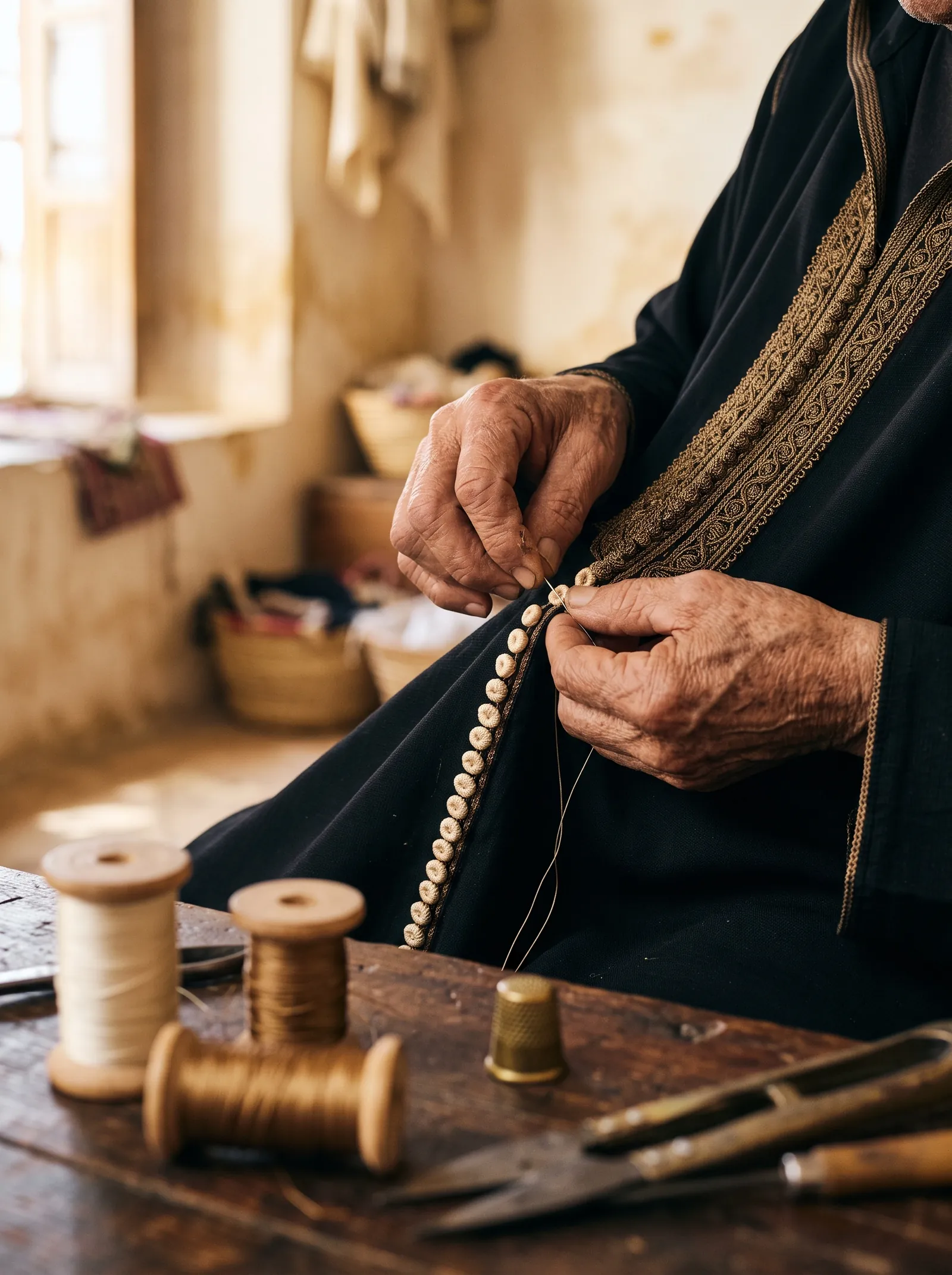
Walk through the medina of any Moroccan city and you will find embroidery doing quiet work everywhere: on caftans and cushions, on the hems of wedding garments, in the braid that finishes a djellaba. None of it is only decoration. Embroidery here is a language with a grammar and a set of regional accents, still learned by sitting beside someone who already knows it.
A machine can repeat a motif. It cannot decide one.
Sfifa, the braided line
Sfifa is the braid that runs along a neckline or down a front opening. It is worked separately, by hand, then applied so precisely that it seems to grow out of the cloth. In our atelier, one artisan may spend a full morning on the sfifa of a single caftan, which is most of why a piece like the Noir Heritage Set takes the time it does. You can see this work up close in our Hand Embroidery pages.
Aakad, the knotted button
The small knotted buttons that close a traditional caftan are called aakad. Each one is tied, not sewn, from a continuous silk thread. Forty buttons means forty small acts of patience. They fasten a garment. They also take a morning, and nobody who has watched one being tied thinks of them as fastenings afterwards.
Why it cannot be rushed
A workshop with the right equipment could produce the same motif faster than any of our artisans. What it could not do is judge where that motif should sit on this particular panel, at this width, so the pattern reaches the shoulder seam without breaking. That judgement is made stitch by stitch, and it is why embroidered pieces from our limited editions take the time they take, and why we would not speed them up if we could.
Reading a garment like a text
Once you know the vocabulary, an embroidered caftan becomes legible. The density of the sfifa tells you how many mornings it took. The evenness of the aakad tells you whose hands tied them; every artisan knots with a slightly different tension, the way every writer leans on different words. When clients visit the atelier, we encourage them to turn a garment inside out. The back of the embroidery, invisible when worn, is the part we would show you first.
The next time a K-Loh piece arrives, look at the neckline before anything else. Count the rows of braid. Somewhere in them the pattern makes a decision no chart dictated: a turn taken slightly wider, a knot set a breath closer to its neighbour. That is the artisan’s hand showing through, and it is why no two pieces from an edition are identical.
Maison K-Loh · Made in Morocco
 Dressing for a Wedding When You Are Not the Bride
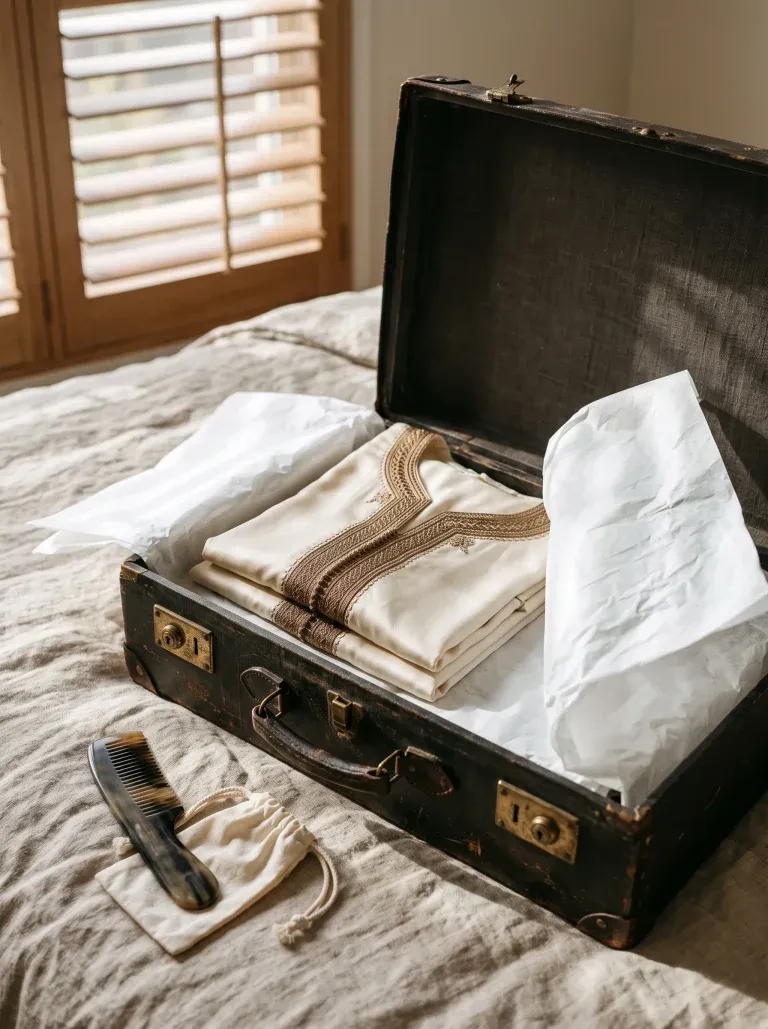 Packing a Caftan So It Arrives Ready
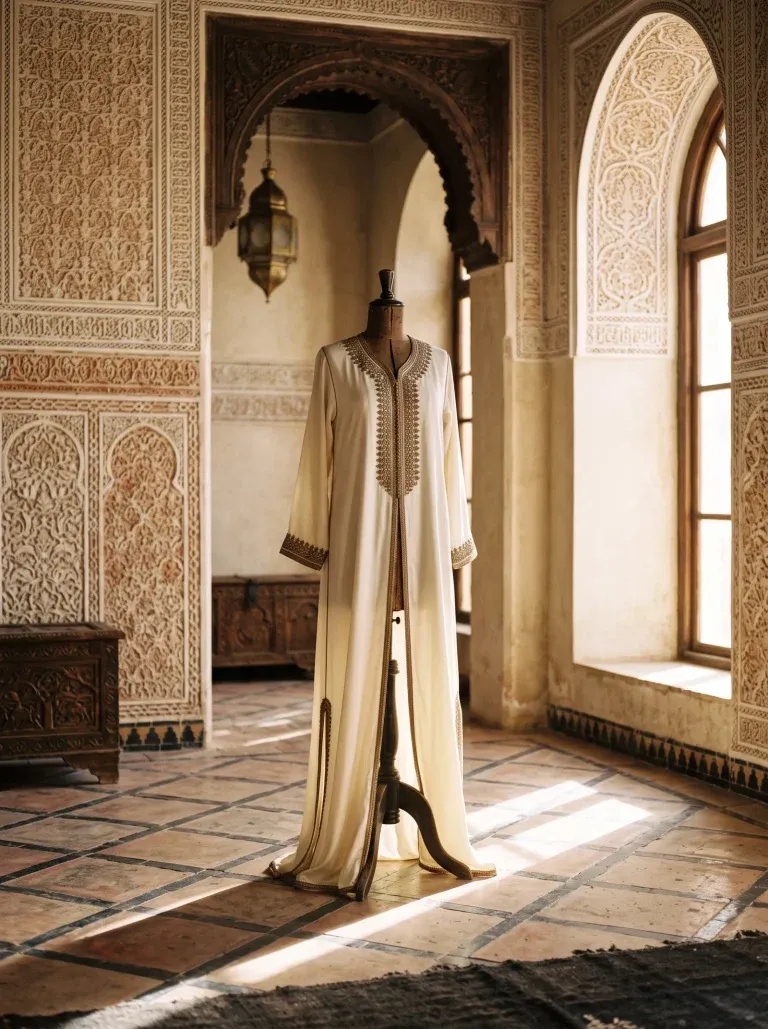 The Caftan, From Court Dress to Modern Wardrobe