

Packing a Caftan So It Arrives Ready
July 29, 2026 · 2 min read
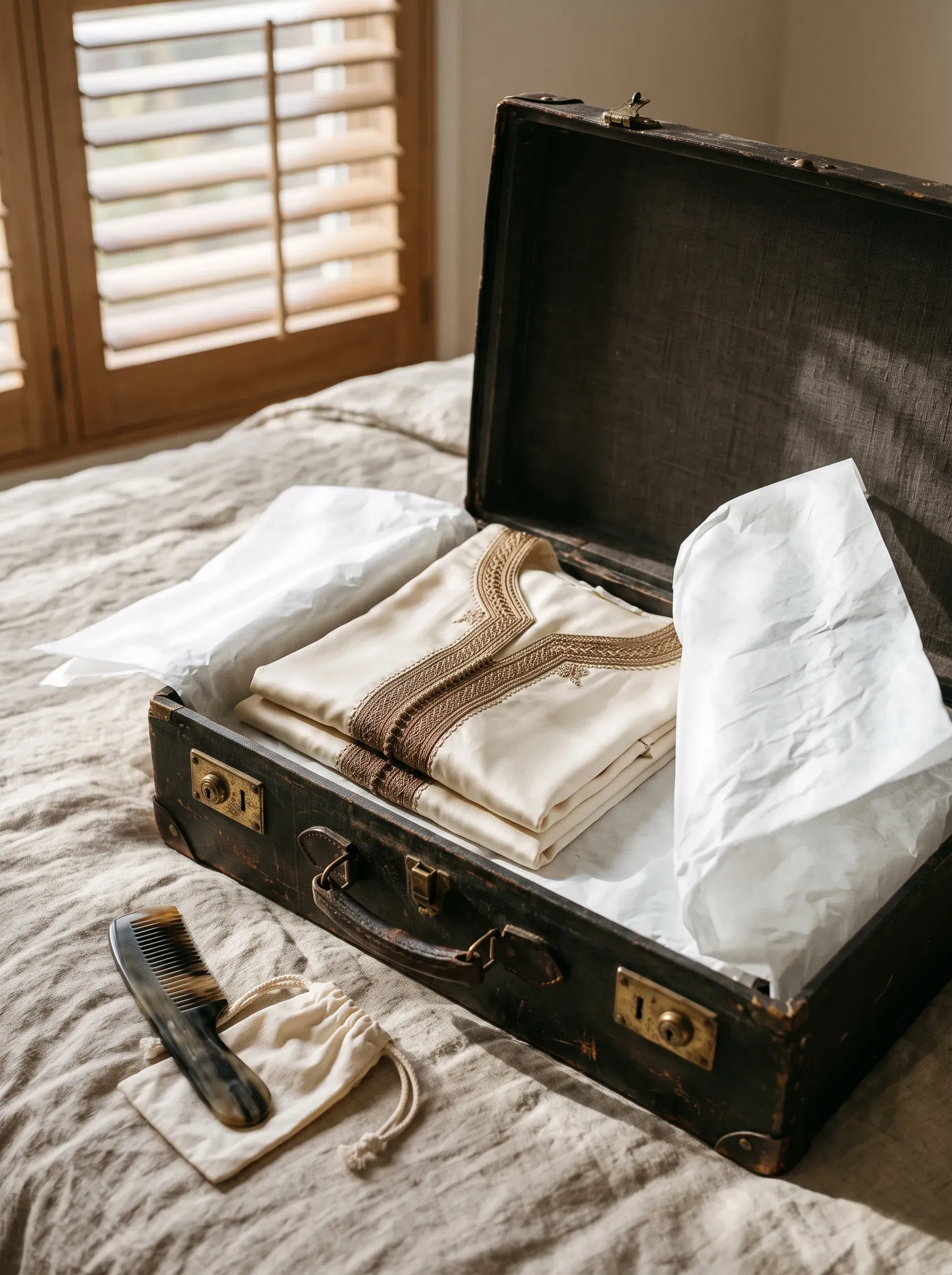
A caftan travels better than almost anything else in a suitcase, provided it is folded rather than rolled and provided it is not asked to share the case with a pair of boots. Most of the creasing clients describe after a flight happens in the last ten minutes of packing, when something heavy goes in on top.
Fold along the seams the garment already has.
The fold
Lay the piece face down and smooth it flat with your palm. Bring each sleeve back along the shoulder seam so it rests against the body of the garment. Fold the sides inward to meet at the centre, following the line of the side seams rather than inventing new ones. Then fold once at the waist, twice for a floor length caftan, and set it on top of everything else in the case. Tissue between the folds helps if you have it, and a cotton pillowcase does the same work if you do not.
On arrival
Hang the piece in the bathroom while you shower. Ten minutes of steam settles most travel creases in linen and silk, and it does so more gently than any iron. If a fold line survives that, press it on the reverse with a warm iron and stop there. Leave the hotel steamer alone near embroidered panels, because its heat is unregulated and the metallic thread in sfifa does not forgive it.
Two things we would keep out of a suitcase altogether. Dense sequin work, the Beldi Moonlight blouse among them, travels far better on a hanger inside a garment bag, where nothing presses the beading flat. And anything you intend to wear within an hour of landing should go in the garment bag too, because cloth given a night to recover looks the way it did when it left the atelier.
Our Care Guide covers, fibre by fibre, what to do once you are home again.
Maison K-Loh · Made in Morocco
 Dressing for a Wedding When You Are Not the Bride
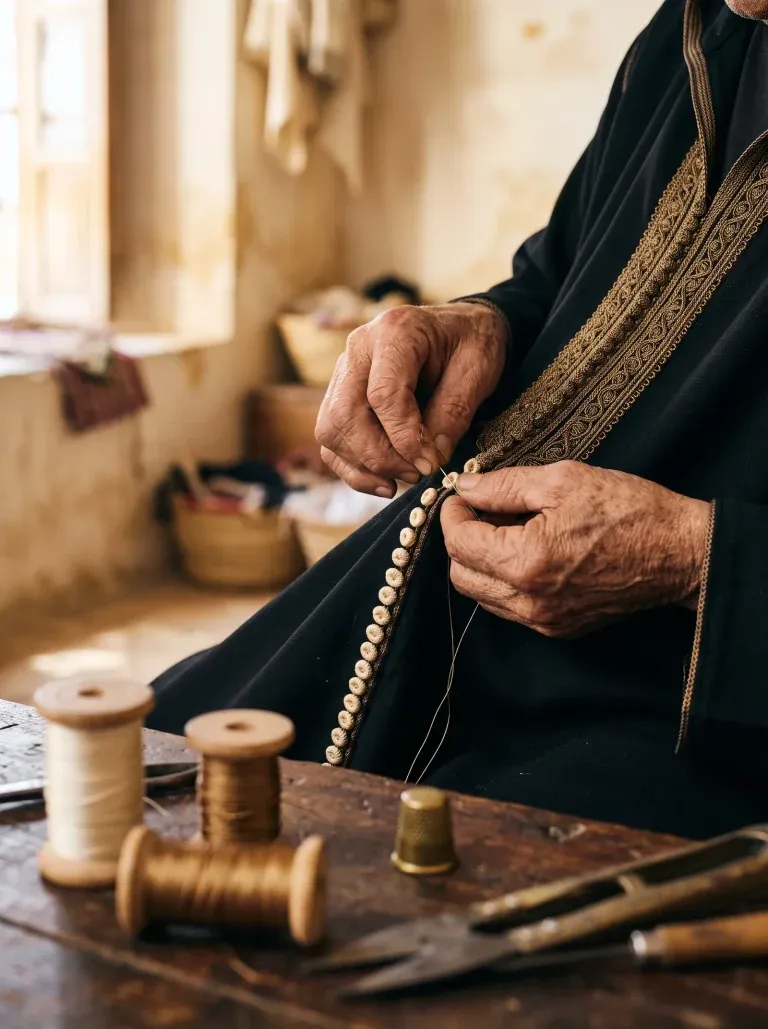 The Language of Moroccan Embroidery
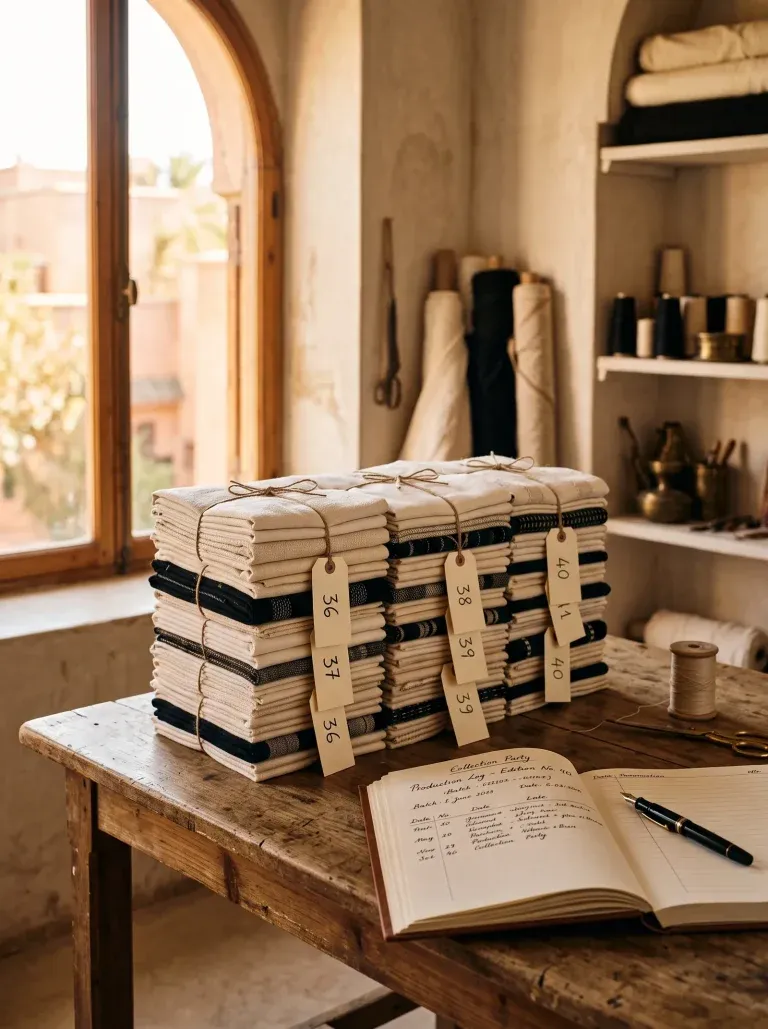 Why We Cut Only Forty