

Dressing for a Wedding When You Are Not the Bride
August 6, 2026 · 2 min read
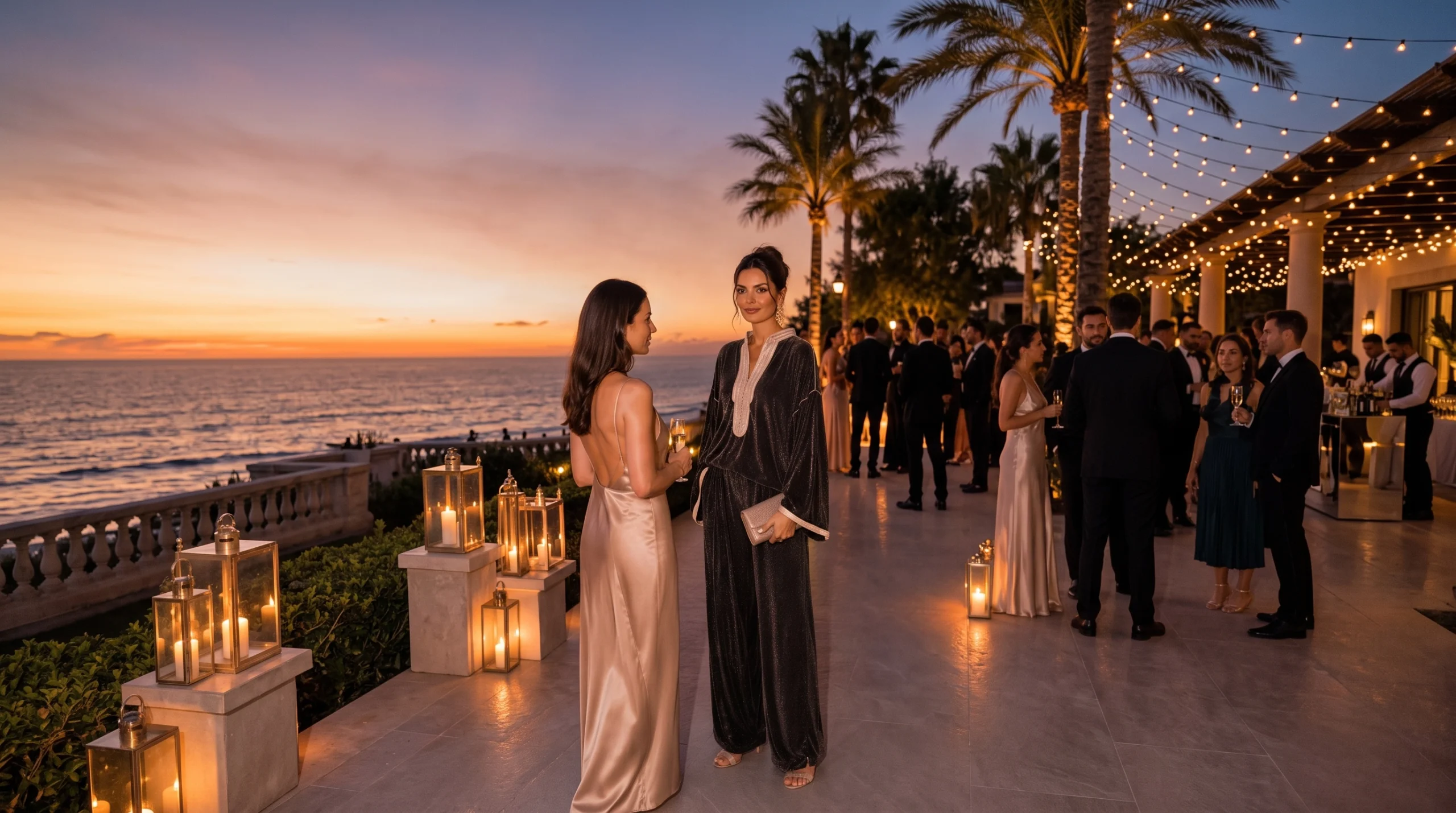
Moroccan weddings run long, change setting several times, and involve more sitting on low seating than most guests expect. A dress chosen for one photograph rarely survives all of it. These are the questions our advisors ask when a client writes to us about a wedding.
How long will you be in it?
A celebration can run from an afternoon reception to a breakfast at dawn. Cloth that behaves at hour two may not at hour nine. Linen and silk stay comfortable across a long night, while heavy velvet asks more of you unless the venue is genuinely cold. If the evening moves between an indoor hall and an outdoor courtyard, choose for the colder of the two rooms and carry nothing extra.
How close are you to the bride?
The old rule about avoiding white holds, and in Morocco it reaches further than most guests realise. The bride changes into several ceremonial colours across the night, among them gold, green and deep red. If you are close enough to the family to ask which she has chosen, ask. If you are not, the safe ground is a colour she is unlikely to wear at all, which in practice means the blues and the browns, the Marrakesh Bleu Set and the Terre & Ciel Set being the two we suggest most often.
Will you be sitting on the floor?
Often, and for longer than you think. A caftan handles this better than any fitted silhouette, because the side slits let you fold your legs without the hem riding up your shin. This is the practical reason the caftan survived as ceremonial dress instead of becoming a decorative one, and it is worth remembering when the seating turns out to be cushions.
Guests write to us about weddings more than any other occasion, usually about three weeks out and usually a little worried. Three weeks is enough to have a piece cut to your measurements and delivered in time. If the date is sooner, say so when you write, and we will only show you what can actually arrive.
Maison K-Loh · Made in Morocco
 When You Are Between Two Sizes
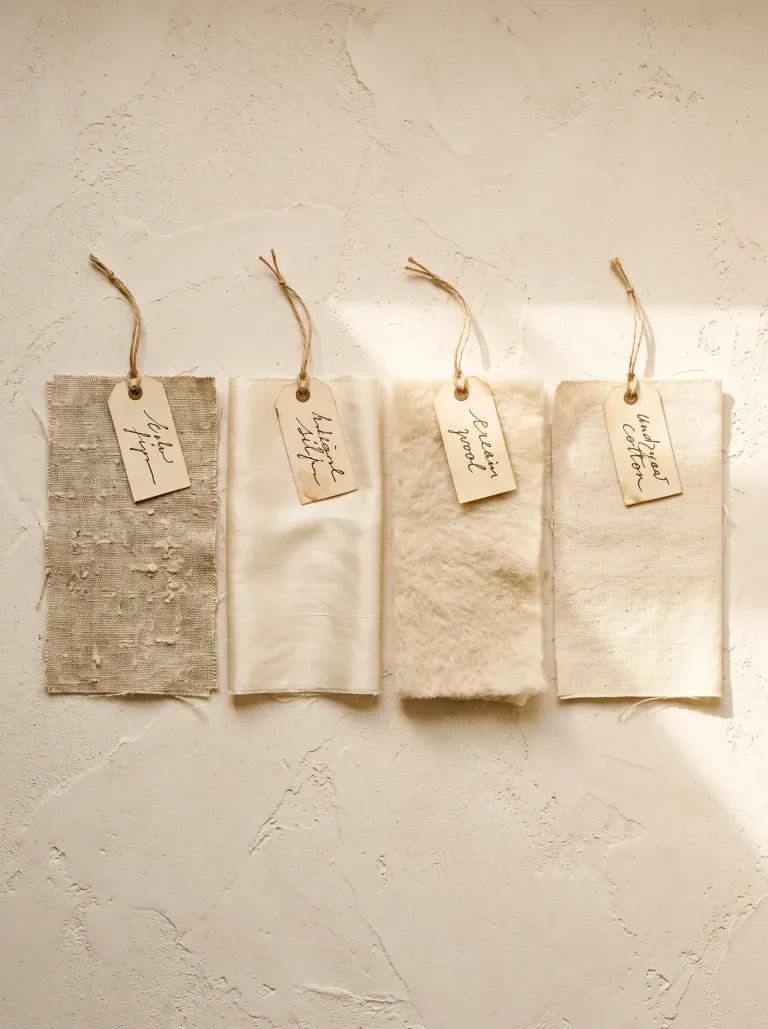 Silk, Wool, and the Case for Natural Fibres
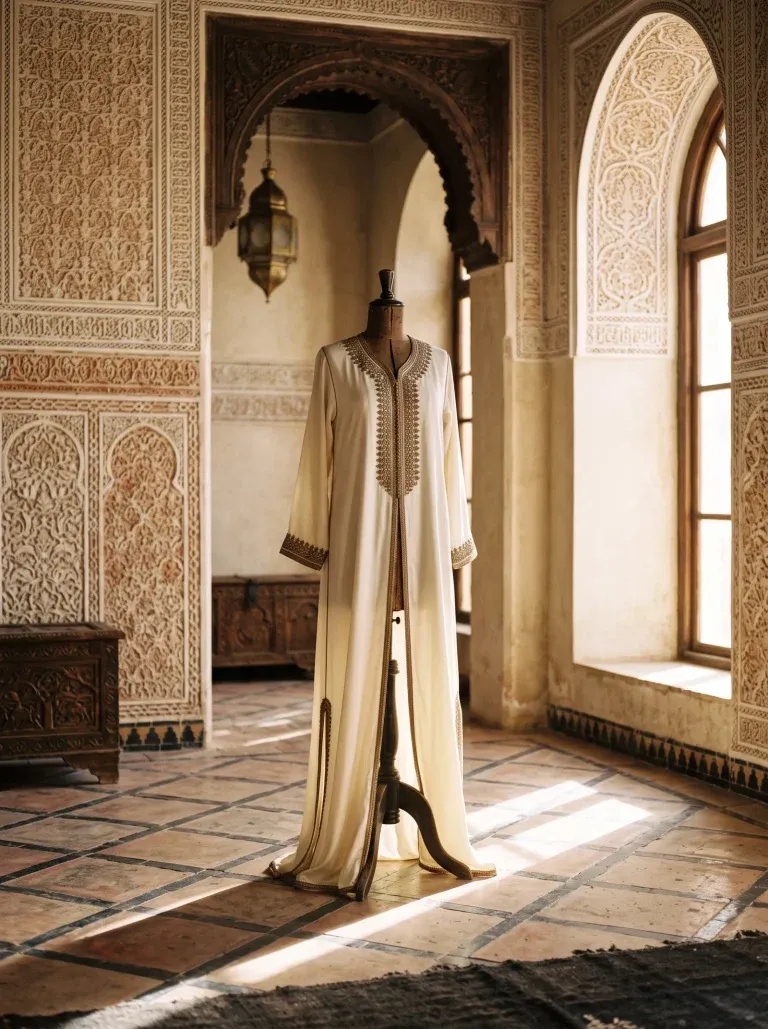 The Caftan, From Court Dress to Modern Wardrobe