

The Caftan, From Court Dress to Modern Wardrobe
March 17, 2026 · 2 min read
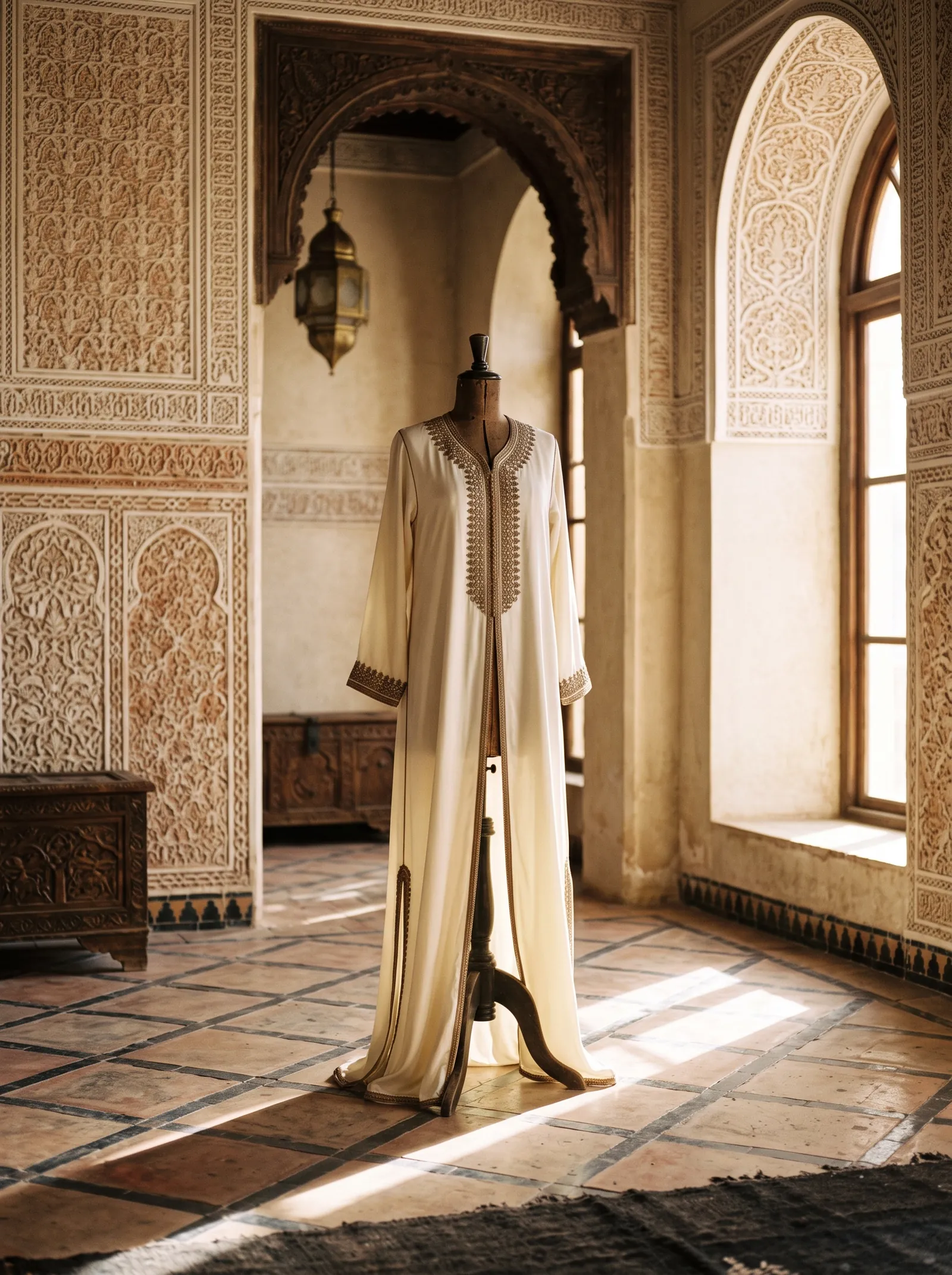
The caftan came to Morocco centuries ago along the routes that connected Andalusia, the Ottoman court, and the cities of the Maghreb. What began as court dress became something that belongs equally to ceremony and to daily life, and that Moroccan hands have never stopped refining.
Modest by design, graceful by consequence.
A silhouette that respects the body
The caftan does not cling, and it does not hide the person wearing it. It falls in one uninterrupted line from shoulder to hem, and everything interesting happens at the edges: the neckline, the sfifa, the sleeve, the side slits that free the stride.
From Fez to the world
Every Moroccan city has left its accent on the caftan. Fez gave it discipline and its densest embroidery. Rabat answered with lightness, Marrakech with colour. Our ateliers draw on all of these, cutting traditional silhouettes in the natural fibres we describe in Natural Fibres.
The caftan today
We cut caftans for women who wear them to dinners, to prayers, to weddings, and to Tuesday afternoons. Some arrive exactly as designed, others are adjusted to your measurements before a scissor touches cloth. Either way, you are wearing several centuries of refinement, finished by hand last month in Morocco.
How to wear one now
The women who wear our caftans best treat them the way Moroccan women always have: as clothing, not costume. Worn with sandals in the afternoon and with jewellery after dark. Belted for structure, or left to fall. The caftan has survived five centuries precisely because it refuses to be precious about itself, and the modern wardrobe is simply its newest court.
If you are choosing your first caftan, begin with cloth rather than colour. A linen caftan is the summer answer. Silk earns its place at every dinner you will attend for a decade. The silhouette underneath will not change, which is the only promise a garment this old needs to make.
Maison K-Loh · Made in Morocco
 Dressing for a Wedding When You Are Not the Bride
 The Language of Moroccan Embroidery
 When You Are Between Two Sizes