

Cared for, kept for years.
Natural fibres reward patience. A K-Loh piece asks for less washing than you expect and more air than you think, and in return it stays with you for decades.
The less you do to a garment, the longer it stays itself.
Most of what people call wear is really washing. Linen, silk and wool shed creases and odours with air alone, and every unnecessary cycle costs a little of the hand feel the atelier pressed into the cloth.
Below: how we care for each fibre, the five minutes that matter most, and what to do the day something goes wrong.
Ask an advisorHow to keep each cloth.
Machine wash cold on a gentle cycle, or by hand with a neutral soap. Hang to dry while still slightly damp, then press on the reverse with a warm iron. Creases are the signature of flax, not a fault; press only the collar, the cuffs and the front line, and let the rest fall as it likes.
Hand wash cold, or dry clean. Never wring a silk piece. Roll it in a towel to draw the water out, dry flat and away from direct sun, and press on the lowest setting through a cotton cloth. Perfume and hairspray belong on skin before the garment goes on, never after.
Air rather than wash. A night on a wide hanger in moving air returns a wool piece to itself. Dry clean seasonally at the most, brush gently along the grain to lift dust, and store folded with cedar rather than hung, so the shoulders keep their line.
Never iron velvet. Steam it from the reverse at a distance of a hand, let the pile settle as it dries, and hang it alone so nothing crushes the nap. Marks in the pile are usually pressure, not dirt, and steam lifts them out.
Turn embroidered pieces inside out before any wash and keep the threadwork clear of the drum. Never set an iron on embroidery directly; a pressing cloth protects the relief. If a metallic thread lifts, do not pull it. Write to us and we will re-couch it by hand.
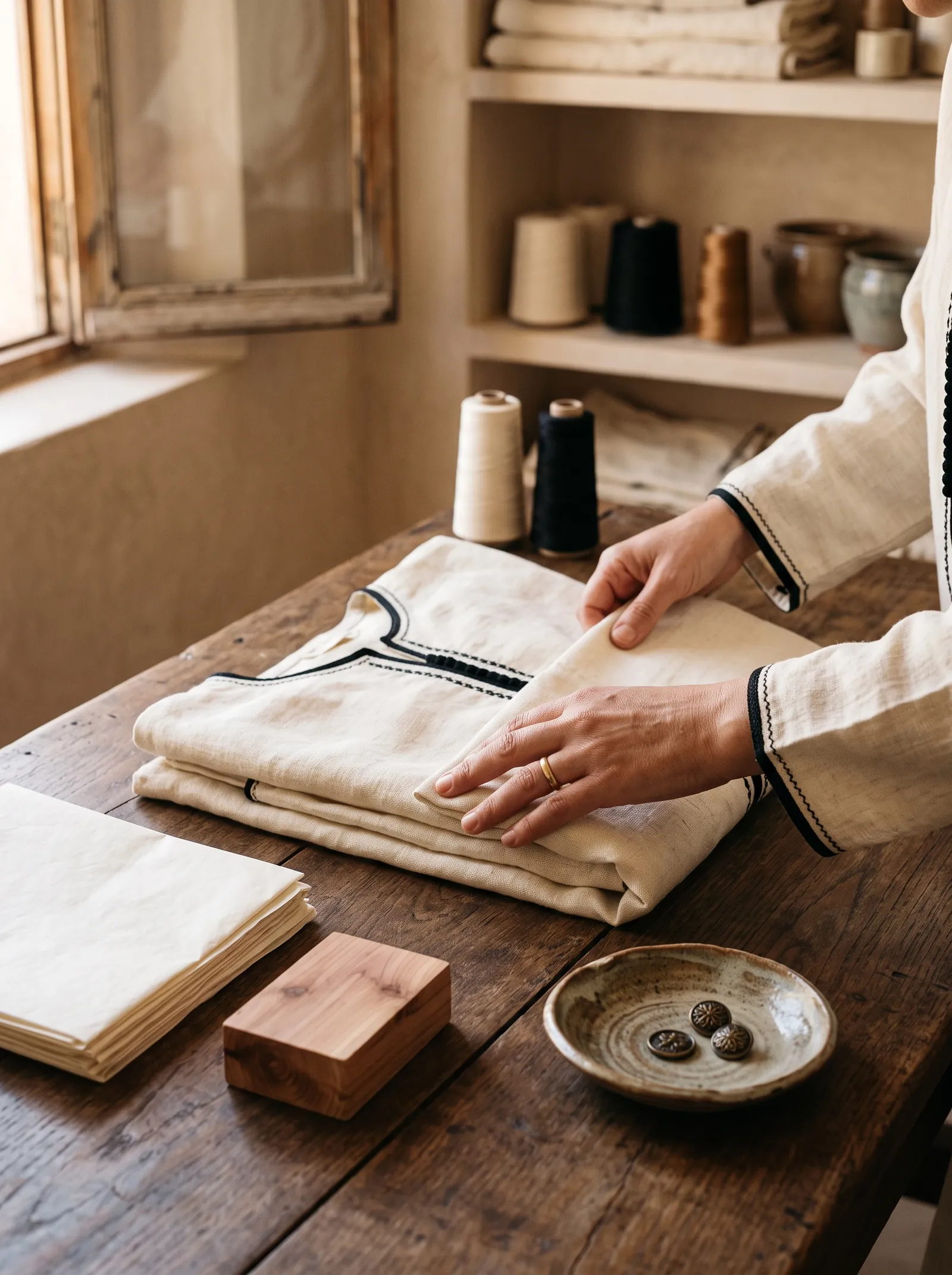
The five minutes that matter
When a piece comes off at the end of an evening, give it five minutes before it disappears into the wardrobe. Hang it somewhere with moving air, away from the radiator and out of the sun. Run a hand down the front to settle the drape. Check the hem and the cuffs for anything that needs attention while it is still easy to fix.
That is the whole ritual, and it replaces most of the washing a garment would otherwise endure. Wardrobes are kinder to clothes than laundry rooms are.
About our fibresA wardrobe keeps time.
After each wearing
Air overnight on a wide hanger. Brush wool along the grain. Spot check the hem. Nothing else, unless something was spilled.
Every few months
Wash linen and cotton when they truly need it, hand wash or dry clean silk, and send wool and velvet out once a season at the most.
Between seasons
Store clean, never dirty; moths follow traces, not cloth. Fold heavy pieces in cotton, keep cedar nearby, and leave the plastic covers at the cleaner.
When something goes wrong.
Blot, never rub, with a clean white cloth from the outside of the mark inward. Cold water on cotton and linen. On silk, wool or velvet, blot dry and stop there; water rings are harder to remove than the original mark.
Do not use water. Let it be, keep it flat, and take the piece to a cleaner within a day or two, telling them exactly what it is. Oil that has been rubbed or wetted is the one stain that usually stays.
Never pull it back through. Trim it flush with small scissors and the weave closes over it. On embroidery, leave it entirely and write to us.
Both are quick repairs, and both are free on any K-Loh piece for the first year. Send a photograph to the atelier and we will tell you where to post it.
Unsure about a stain or a snag?
Write to us before trying anything. Most accidents are recoverable when the first step is the right one, and repairs are free in the first year.
Write to UsRead the Journal