

Silk, Wool, and the Case for Natural Fibres
June 2, 2026 · 2 min read
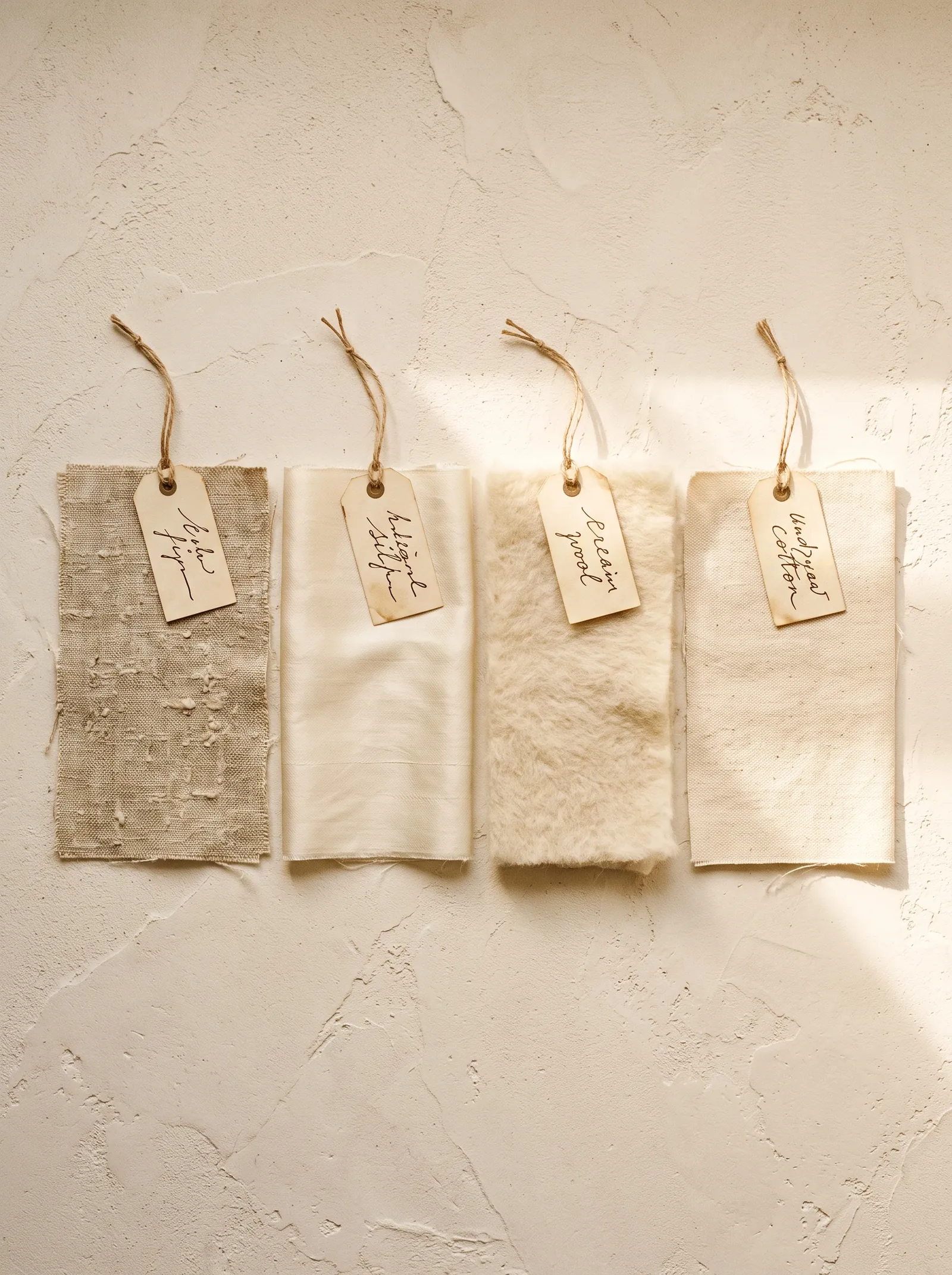
It would be easier to work in polyester. It arrives on time, behaves predictably, and costs a fraction of what we pay for the cloth we actually use. We work exclusively in natural fibres anyway, and after years of doing so we can defend the choice on every ground except convenience.
Cloth that improves with keeping is the only honest luxury.
How cloth ages
Synthetic fabric looks its best on the first day and declines from there. Natural fibre does the opposite. Linen softens with every year, wool relaxes into whoever wears it most, and silk takes on a patina that no finishing process imitates.
How cloth feels
Skin knows the difference even when the eye does not. Natural fibres breathe and carry moisture away in ways plastic thread cannot, which matters in garments made for long days and warm evenings.
The honest cost
Natural fibre asks a little more of its owner: cooler washes, and air instead of the dryer. Our Care Guide covers all of it in a few minutes of reading. In exchange, the garment offers you decades. We consider that a fair trade, and we suspect that anyone who has inherited a well kept wool coat or a silk scarf agrees.
What to look for
When you shop anywhere, not only with us, hold the cloth up to light and look for irregularity. Perfect uniformity is the signature of extrusion; small variations are the signature of a loom. Then check the label for percentages. A fibre listed at one hundred percent behaves the way this essay describes. A blend behaves like its cheapest ingredient. It is the simplest rule in the wardrobe, and the most reliably ignored.
The case is finally arithmetic. A synthetic garment worn thirty times and discarded costs more per wearing than a natural one worn three hundred times and handed on. The fashion industry would prefer you not do that sum, which is why we print it here. Buy less and buy fibre. Your grandmother’s coat is the proof, and it is probably still in a cupboard somewhere.
Maison K-Loh · Made in Morocco
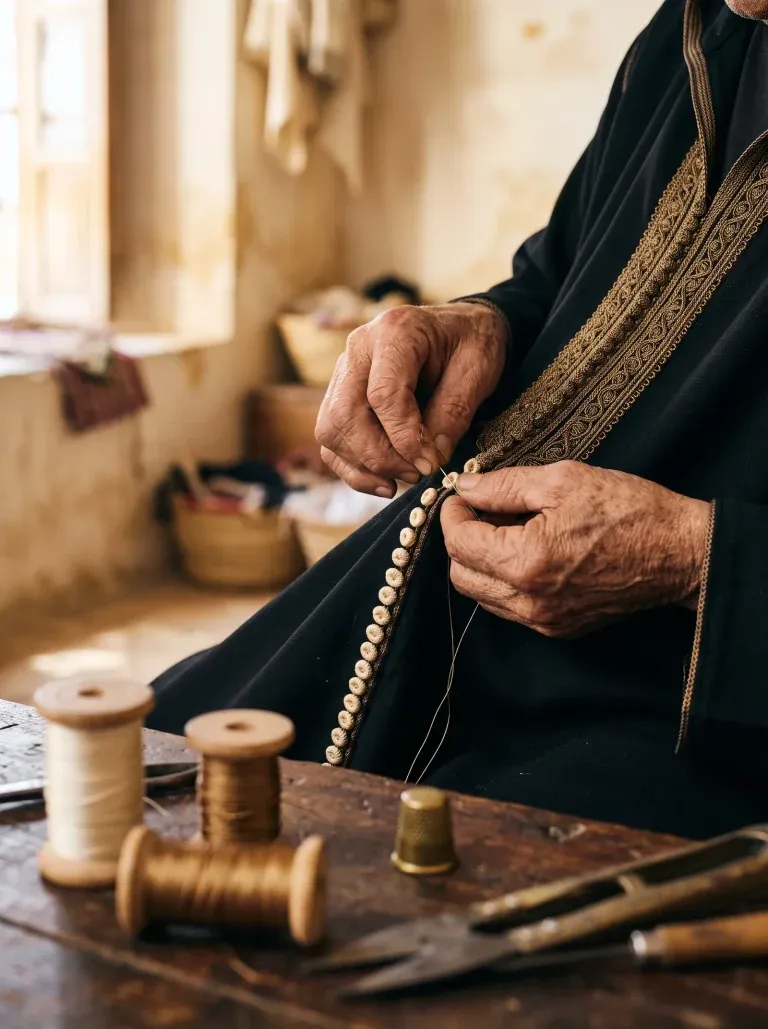 The Language of Moroccan Embroidery
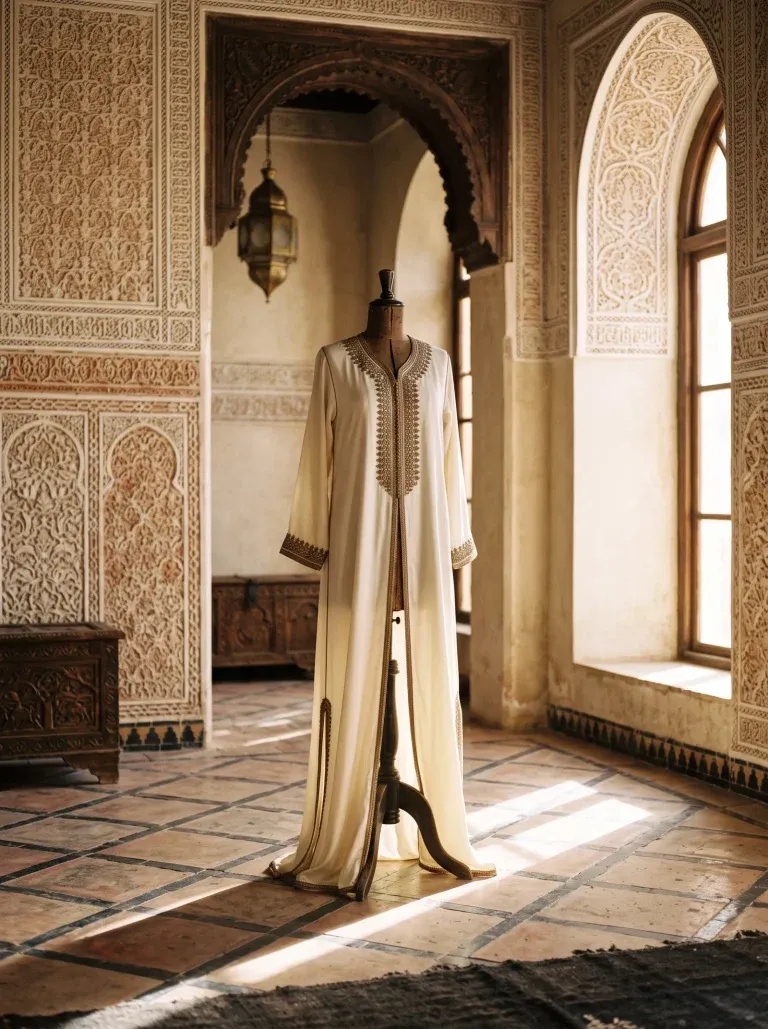 The Caftan, From Court Dress to Modern Wardrobe
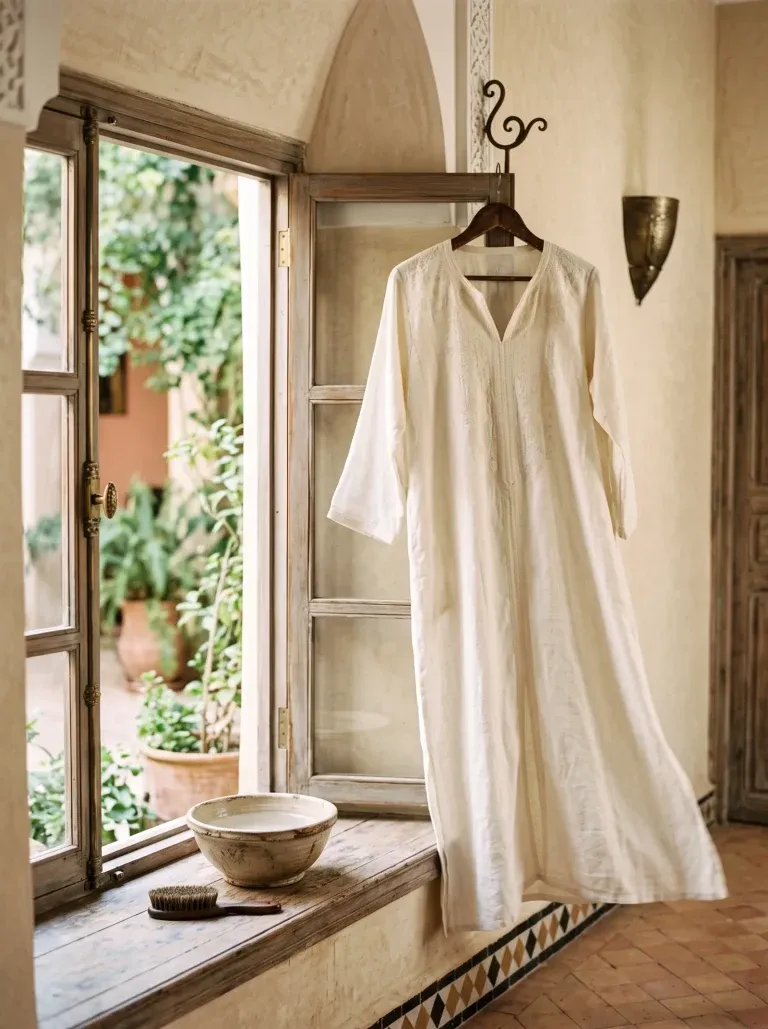 Caring for Linen, the Atelier Way